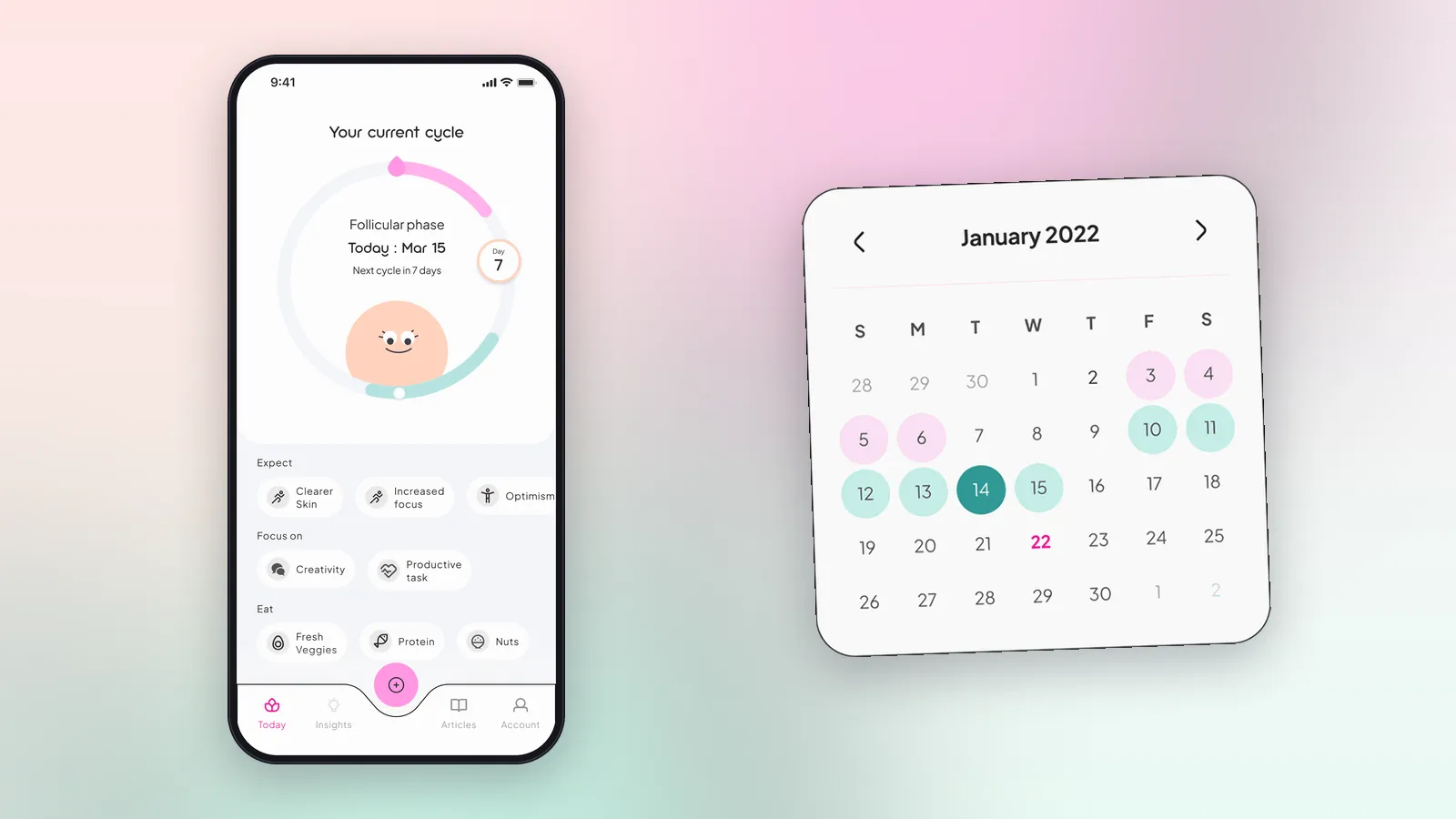
Not on its own. A standard period tracker, SheSync included, predicts your fertile window from the dates of your past periods. That's the calendar method, which healthdirect describes as "quite unreliable" for preventing pregnancy. Fertility awareness methods that track your body's signs every day work much better, but they take several cycles to learn and still fail more often than most other contraception.
We make SheSync, a period tracker, and we say this on our own app pages too: it is not a contraceptive.
Why a predicted fertile window isn't enough
Period apps show a fertile window of about six days: the five days before ovulation and the day of it. But that window is an estimate:
- Ovulation moves. The NHS says ovulation usually happens 10 to 16 days before your next period, not on a fixed day.
- Sperm can survive up to 7 days, so sex several days before ovulation can still lead to pregnancy.
- Cycles change. Stress, illness, travel and coming off hormonal contraception all shift ovulation, and an app only finds out afterwards.
healthdirect says fertility awareness isn't recommended if you've recently stopped hormonal birth control, have irregular periods, or are nearing menopause. Calendar-based methods aren't suitable for irregular periods at all.
Example 28-day cycle
- Period
- Estimated fertile window
- Estimated ovulation, 13 days before the next period
What fertility awareness actually involves
Fertility awareness (natural family planning) means recording several signs every day, not just period dates:
- Your temperature, taken at the same time each morning, which rises slightly after ovulation;
- your cervical secretions, which change through your cycle;
- your cycle length, recorded over time.
Combining signs, the symptothermal method, is more reliable than any one alone. healthdirect says it can take 3 to 6 cycles to learn to identify your fertile days correctly, and recommends learning from a trained educator such as Family Planning NSW or Sexual Health Victoria.
How effective is it?
| How it's used | Effectiveness (NHS) |
|---|---|
| Correctly, every time | 91% to 99% |
| Typical use | About 76% |
Fertility awareness: perfect vs typical use
"Typical use" means real life: a missed temperature, a misread sign, or sex on a day that seemed safe. About one in four people relying on it with typical use get pregnant within a year. Fertility awareness also doesn't protect against sexually transmitted infections, so you'll still need condoms for that.
What a period tracker is good for
- knowing when your next period is due, so it doesn't catch you out;
- timing sex if you're trying to conceive, where the fertile window is genuinely useful;
- spotting changes such as irregular cycles, heavy bleeding or new symptoms, and showing a doctor;
- understanding how your energy, mood and symptoms shift through your cycle.
If you want contraception, talk to a GP or a family planning clinic about the options. If you're on the pill, see how to track your period on the pill.
If you had unprotected sex
In Australia you can get emergency contraception from a pharmacy without a prescription. healthdirect says levonorgestrel pills work up to 72 hours after sex and ulipristal pills up to 120 hours, and that a copper IUD fitted within 5 days is the most effective emergency option. The sooner, the better.
Emergency contraception: how long after sex
Quick quiz: true or false?
Eight things people often get wrong about period apps and fertility. Everything here comes from this article and its sources.
True or false?
A period app's fertile window covers about six days
TrueThe five days before ovulation and the day of it. But it's an estimate.
Ovulation always happens exactly 14 days before your next period
FalseThe NHS says it usually happens 10 to 16 days before your next period.
Sperm can survive for up to 7 days
TrueSo sex several days before ovulation can still lead to pregnancy.
Fertility awareness also protects against STIs
FalseIt doesn't. You'll still need condoms for that.
Learning fertility awareness properly can take 3 to 6 cycles
Truehealthdirect recommends learning from a trained educator.
Calendar methods work fine if your periods are irregular
FalseCalendar-based methods aren't suitable for irregular periods at all.
In Australia, you need a prescription for emergency contraception pills
FalseYou can get them from a pharmacy without a prescription.
SheSync can be used as contraception
FalseSheSync helps you understand your cycle and plan. It is not a contraceptive, and it never claims to be.
How SheSync fits
SheSync predicts your period, ovulation and fertile window from your own logged history, tells you which phase you're in, and accounts for contraception like the pill, implant or ring. It's built for understanding your cycle and planning around it, including if you're trying to conceive. It is not a contraceptive, and it never claims to be.
Want a quick estimate first? Try our period and ovulation calculator.
This is general information, not medical advice. If you're worried about your symptoms, see your GP or call healthdirect on 1800 022 222. In an emergency in Australia, call 000.
Frequently asked questions
Can I use a period tracker app as birth control?
Not a standard period tracker. Predicting fertile days from past cycle dates alone, the calendar method, can be quite unreliable according to healthdirect. Fertility awareness methods that track temperature and cervical secretions every day are more reliable, but they take several cycles to learn properly.
How effective is natural family planning?
The NHS says fertility awareness methods are 91% to 99% effective when used correctly all the time, but only about 76% effective with typical use, because they're easy to get slightly wrong.
Is SheSync a contraceptive?
No. SheSync predicts your period, ovulation and fertile window to help you understand your cycle and plan, including if you're trying to conceive. It is not a contraceptive method and shouldn't be used to prevent pregnancy.
What should I do if I had unprotected sex during my fertile window?
In Australia, emergency contraception pills are available from pharmacies without a prescription. One type works up to 72 hours after sex and another up to 120 hours, and a copper IUD fitted within 5 days is the most effective option. Ask a pharmacist or doctor as soon as you can.
Read next
- Ovulation symptoms7 signs your body gives
- Tracking on the pillWithdrawal bleeds, and what's still worth logging
- Why is my period late?Ten common reasons, and when to see a doctor
- Period and ovulation calculatorA quick estimate, not contraception
Sources
- Fertility awareness (natural family planning), healthdirect
- Natural family planning (fertility awareness), NHS
- Periods and fertility in the menstrual cycle, NHS
- 'Morning after' pill (emergency contraception pill), healthdirect
- SheSync privacy policy, Digital Sauce
Last updated 10 November 2026. SheSync is a tracking and education tool, not a medical device or contraceptive method. For medical questions about your cycle, talk to your doctor.