One number a shift worker can act on: a daily recovery score, backed by sleep-stage tracking and shift-aware recommendations — when to cut caffeine, when to rest before a big shift, when to hydrate.
The problem
The economic cost of inadequate sleep in Australia exceeded $29.6 billion in 2019–20, with the reduction in wellbeing valued at a further $45.9 billion (Deloitte Access Economics, 2020). Shift workers are particularly vulnerable: disrupted sleep puts them at increased risk of adverse physical and mental health outcomes — and almost every sleep app on the market assumes you sleep at night.
SleepSync aims to help shift workers claim back their sleep and life.
Built on research, not assumptions
SleepSync is the smartphone app of Sleep Health Systems — global experts in sleep and circadian neuroscience with over 20 years of research, working with Monash University. The project started with a full research phase: understanding shift workers' real schedules, constraints and habits before a single screen was designed. The 59-slide research deck covers the audience analysis, evidence base and design direction.
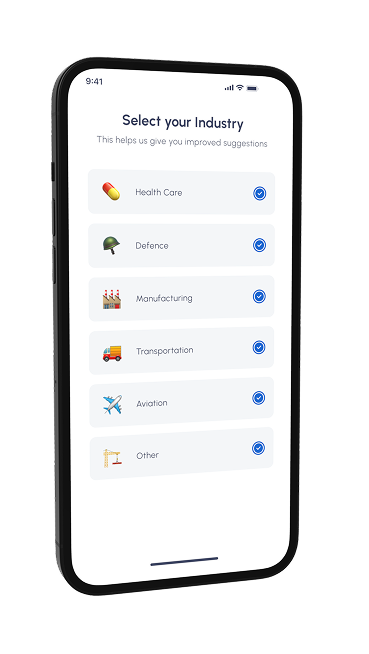
The science underneath is circadian: shift work disrupts the 24-hour body clock, raising the risk of alertness failures, poor sleep and worse health. SleepSync turns that neuroscience into personalised, confidential guidance — sleep schedules, light exposure and alertness regulation tuned to each worker's roster, across industries from healthcare and aviation to mining and manufacturing.
What the app does
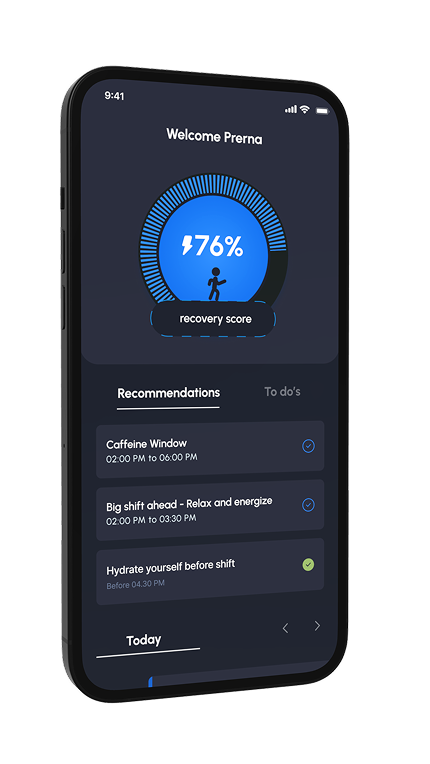
- Recovery score — a single daily number that tells you how recovered you are, not just how long you slept.
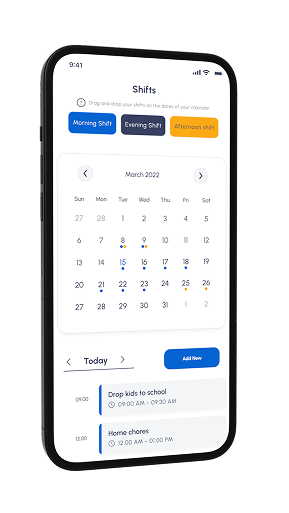
- Shift-aware recommendations — caffeine windows, pre-shift rest and hydration prompts timed around your roster, not a 9-to-5.
- Sleep-stage tracking — deep, light, REM and awake time visualised simply.
- Check-in streaks — gentle gamification that builds the habit without nagging.
Designed for iOS and Android, with sign-in via Apple and Google.
The product