The problem
People living in care centres often lack the opportunity — or the ability — to stay connected with their families in a digital world. Standard social apps assume young eyes, steady hands and tech confidence. TeaTime doesn't.
Three users, three apps
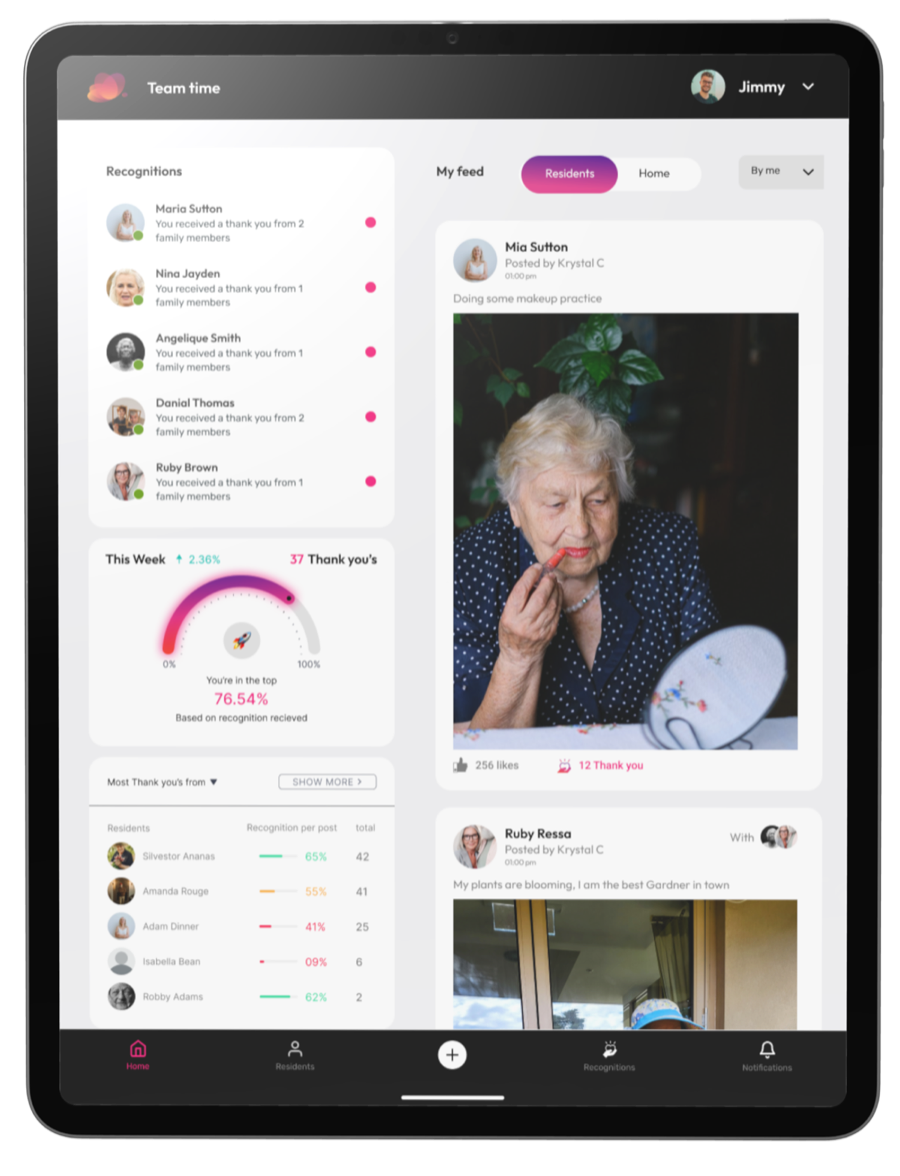
Early research identified three distinct users with genuinely different needs: aged-care administrators, care staff, and family members. Rather than force one interface to serve all three badly, TeaTime became a suite of three apps that serve each user properly and talk to each other seamlessly.
One suite, three apps
- Aged-care administratorsTheir own app
- Care staffTheir own app
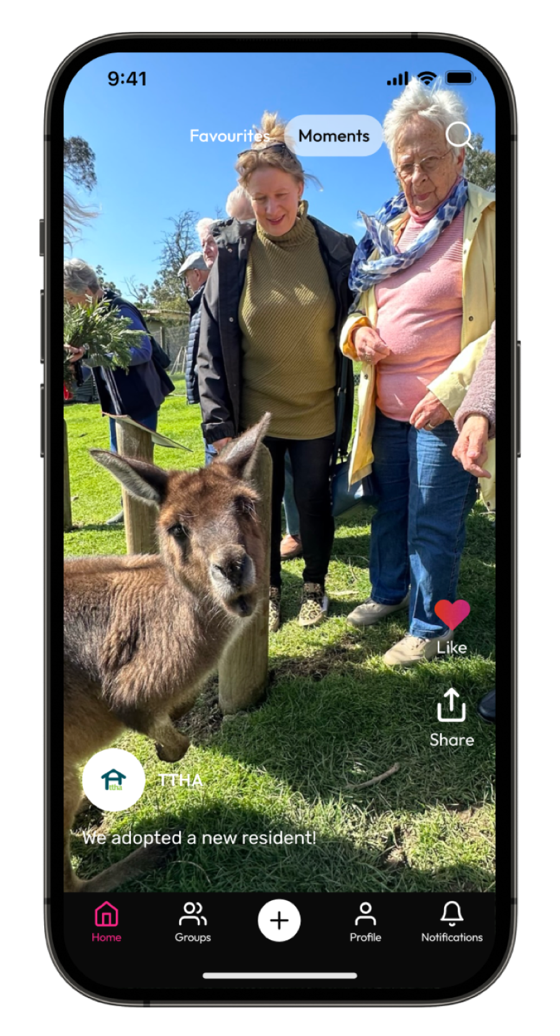
- Family membersTheir own app
Each group gets an app built for them. The three apps talk to each other seamlessly, so families close and far stay connected to life in the care centre.
Splitting one product into three is a bigger build, but it's often the honest answer. An interface that tries to suit a care manager, a busy staff member and a grandchild all at once usually ends up suiting none of them.
The process
A full Double Diamond: Discover (user research in real care centres), Define (synthesis into insights and problem framing), Develop (ideation and prototyping), Deliver (build and implementation), shipped to both the App Store and Google Play.
The Double Diamond
Tap each phase to see what it covered on TeaTime.
Four phases
1. Discover Research
- What we did
- User research in real care centres.
- What came out
- Three distinct users with genuinely different needs: administrators, care staff and families.
2. Define Synthesis
- What we did
- Synthesised the research into insights and framed the problem.
- What came out
- The problem: people in care centres often lack the opportunity, or the ability, to stay connected with family in a digital world.
3. Develop Design
- What we did
- Ideation and prototyping.
- What came out
- The decision to build a suite of three connected apps instead of one interface for everyone.
4. Deliver Build
- What we did
- Build and implementation.
- What came out
- TeaTime, shipped to both the App Store and Google Play.
Outcomes
usability score on the System Usability Scale (SUS)
care-centre engagement
family-member conversion
SUS score, out of 100
- Usability score up from 51 to 82 on the System Usability Scale (SUS)
- Care-centre engagement up 22%
- Family-member conversion up 3×
"TeaTime exemplifies dedication to revolutionising elder care and reshaping perceptions of aged care, making a profound impact on society." — AMP Foundation