What counts as an irregular period?
healthdirect describes a menstrual cycle as typically ranging from 21 to 35 days, with a period lasting about 3 to 7 days. Your cycle is regular if there's about the same number of days between periods each time. Periods are irregular if they:
- come earlier or later than expected;
- are heavier or lighter than usual;
- are shorter or longer than usual.
Irregular periods are normal when periods first start, and can happen after having a baby and during perimenopause.
Common causes
healthdirect lists two broad groups:
- Lifestyle: stress, sudden weight loss or gain, too little exercise, and starting or changing hormonal contraception.
- Medical: PMOS (formerly PCOS), premature ovarian insufficiency, uterine polyps, adenomyosis and cancer.
If your period is late rather than irregular overall, see why is my period late?
PCOS is now PMOS
In May 2026, polycystic ovary syndrome (PCOS) was renamed polyendocrine metabolic ovarian syndrome (PMOS). The new name reflects that it's a lifelong condition affecting hormones and metabolism across the body, not just the ovaries. healthdirect and Jean Hailes both note that the condition, how it's diagnosed and how it's treated haven't changed. You'll still see "PCOS" in older articles and on many forms.
Jean Hailes says PMOS affects about 1 in 8 women, and it's often missed. Common signs include:
- irregular or absent periods;
- excess facial or body hair, acne, or scalp hair loss;
- difficulty losing weight;
- anxiety, depression or low self-esteem;
- difficulty getting pregnant.
Doctors diagnose PMOS when you have two of three signs: irregular or absent periods, high androgen levels (from symptoms or a blood test), and many partly formed follicles on ultrasound or a high AMH blood test. They'll also rule out conditions that look similar, such as thyroid problems. In teenagers, doctors may watch for several years before diagnosing, because irregular cycles are common early on.
When to see a doctor
healthdirect advises seeing your doctor if you have any symptoms of irregular periods, and especially if you have:
- no period for three months or more;
- eight or fewer periods in a year;
- no period by age 16;
- bleeding between periods or after sex;
- periods that last longer than 7 days;
- irregular periods with weight gain, tiredness or difficulty getting pregnant.
How to track an irregular cycle well
healthdirect suggests keeping a record of your periods in a diary or phone app and bringing it to your appointment. The most useful things to log:
- The day each period starts and stops. This gives your cycle length and period length, the two numbers your doctor will ask about first.
- How heavy it is, including spotting between periods.
- Symptoms, such as pain, acne, mood or energy, and when in your cycle they happen.
- Changes in your life: new contraception, illness, stress, travel or big changes in weight or exercise.
- At least three months of history, if you can. Patterns are hard to see in one cycle.
Be realistic about predictions. Calendar-based predictions of your next period and fertile window rely on your past pattern, so they're less precise when your cycle varies. Never use them as contraception. Our period and ovulation calculator flags cycles shorter than 21 or longer than 35 days for the same reason.
How SheSync helps
SheSync is an iPhone period tracker that learns from your own history:
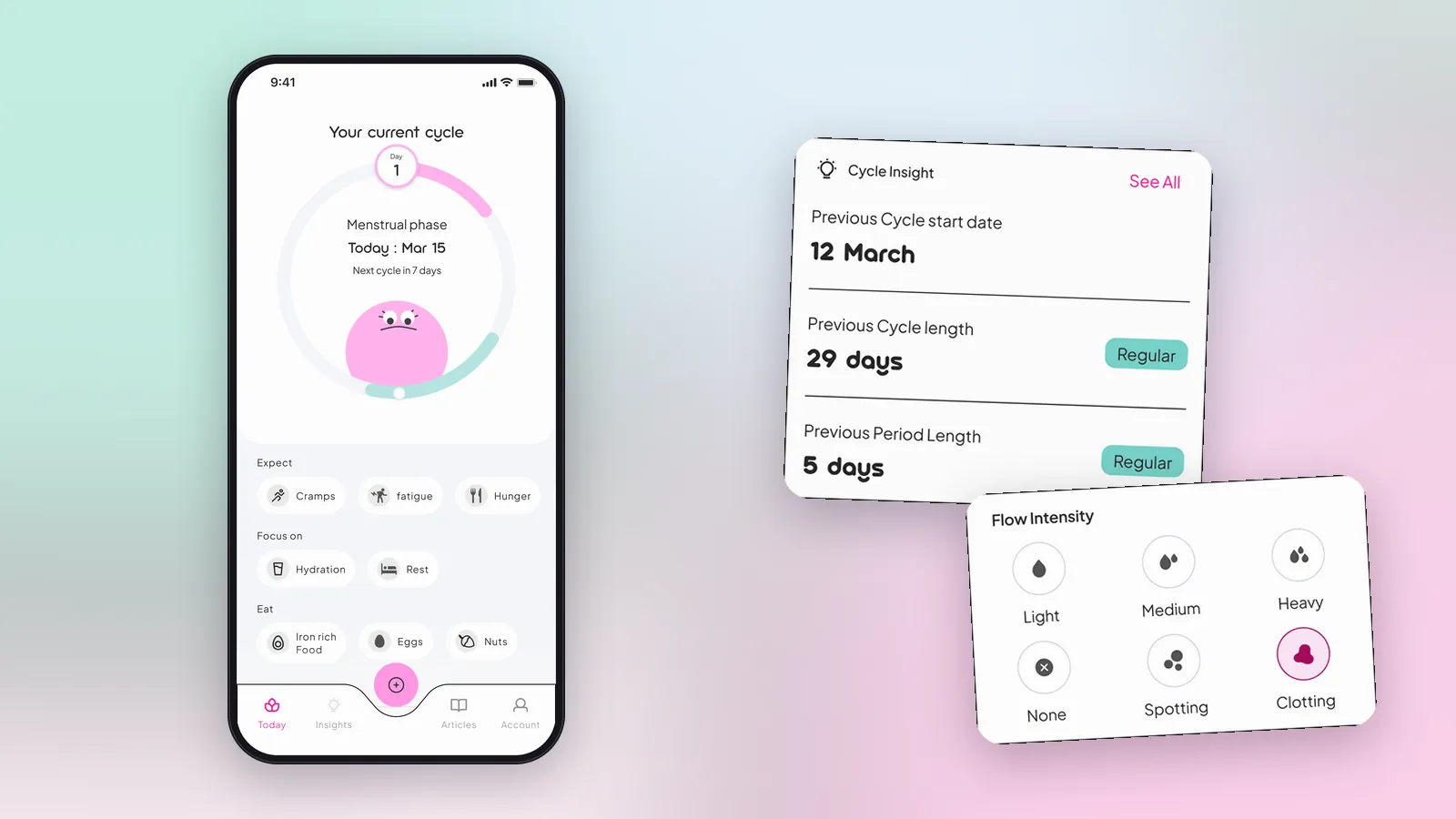
- Each cycle is flagged regular or irregular against your own baseline, not a textbook 28 days.
- Your last start date, cycle length and period length are always one tap away, which is exactly what a doctor asks for.
- Flow logging covers light, medium and heavy, plus spotting and clotting, and symptoms are tied to where you are in your cycle.
- It asks about your contraception instead of assuming every cycle works the same way.
- Tracking is free, and on the free plan your logs stay on your phone.
With SheSync Pro, the in-app AI can factor in your own logged symptoms when you ask why your cycle is changing. It explains, but it doesn't diagnose: anything that worries you is a conversation for your doctor.
Frequently asked questions
What counts as an irregular period?
A typical cycle is 21 to 35 days, and it's regular if the gap between periods is about the same each time. Periods are irregular if they come earlier or later than expected, or are heavier, lighter, shorter or longer than usual.
What is PMOS?
PMOS, polyendocrine metabolic ovarian syndrome, is the new name for polycystic ovary syndrome (PCOS). It was renamed in May 2026 to reflect that it affects hormones and metabolism across the whole body. The condition, diagnosis and treatment haven't changed. Jean Hailes says it affects about 1 in 8 women.
When should I see a doctor about irregular periods?
healthdirect advises seeing your doctor if you have no period for three months or more, eight or fewer periods a year, no period by age 16, bleeding between periods or after sex, or periods lasting longer than 7 days. Also see a doctor if irregular periods come with weight gain, tiredness or difficulty getting pregnant.
Can a period tracker predict irregular periods?
Less precisely than regular ones, because every prediction relies on your past pattern. A tracker that learns from your own history, rather than assuming a 28-day cycle, will do better, and the record itself is valuable to take to your doctor.
Does SheSync work for irregular cycles?
Yes. SheSync predicts from your own logged history, flags each cycle as regular or irregular against your own baseline, and keeps your cycle and period lengths one tap away. Tracking is free. SheSync doesn't diagnose conditions such as PMOS.
Sources
- Irregular periods, healthdirect
- Polycystic ovarian syndrome (PCOS), healthdirect
- PMOS (formerly PCOS): symptoms, diagnosis and treatment, Jean Hailes for Women's Health
- Periods and fertility in the menstrual cycle, NHS
- SheSync privacy policy, Digital Sauce
Last updated 9 October 2026. SheSync is a tracking and education tool, not a medical device or contraceptive method. For medical questions about your cycle, talk to your doctor.