Why a symptom diary matters
Endometriosis is common. healthdirect says around 1 in 9 females in Australia develop it, and Jean Hailes says 1 in 7 women have been diagnosed. Yet diagnosis can take several years, partly because symptoms are easy to dismiss as "just bad periods". Heavy periods are common too: healthdirect says about 1 in 4 females have them.
In a short appointment, "my periods are really bad" is hard to act on. "My pain is 8 out of 10 on the first two days, painkillers don't touch it, and I've missed six days of work in three months" is not.
Symptoms worth raising with a doctor
healthdirect lists these possible symptoms of endometriosis:
- tummy or pelvic pain with your period, during sex, or when going to the toilet;
- pain in your thigh or leg;
- heavy periods or irregular bleeding;
- bleeding from the bladder or bowel, or changes in urination or bowel movements;
- bloating, with or without pain;
- tiredness, especially around your period;
- difficulty getting pregnant.
Your period may be heavy if you bleed for more than 8 days, pass clots larger than a 50 cent coin, need to change a pad or tampon every 1 to 2 hours or overnight, bleed through clothing, or can't do your usual things during your period.
What to track
| What | Why your doctor asks |
|---|---|
| Start and end date of each period | Shows your cycle length, period length and whether they're changing |
| How heavy (and any clots or flooding) | Helps tell normal bleeding from heavy menstrual bleeding |
| Pain: where, how bad (0 to 10), how long | Shows whether pain is tied to your period or happens at other times too |
| Painkillers you took, and whether they worked | Helps your doctor decide what to try next |
| Pain with sex, or with going to the toilet | These are specific symptoms doctors look for with endometriosis |
| Bowel or bladder changes, bloating | Can point to endometriosis affecting nearby organs |
| Tiredness, mood and sleep | Shows how your cycle affects the rest of your life |
| Days you missed work, school or plans | The clearest measure of how much it's affecting you |
| Contraception and any changes | Hormonal methods change bleeding and pain |
Two or three cycles of notes gives your doctor a pattern rather than a snapshot. Don't wait that long if your symptoms are severe or getting worse.
Free tools to bring along
- Jean Hailes' endometriosis checklist (PDF) lets you record your symptoms and how they affect you, to take to your appointment.
- RANZCOG's Raising Awareness Tool for Endometriosis (RATE) helps you and your doctor look at your symptoms together.
At the appointment
- Lead with your top three concerns. Write them down so they don't get lost.
- Show your record. Dates, pain scores and missed days are more persuasive than describing a bad month from memory.
- Mention family history. Tell your doctor if your mum or sister has endometriosis or heavy periods.
- Ask about next steps. healthdirect says your doctor may recommend an ultrasound or MRI, and a laparoscopy (keyhole surgery) can confirm endometriosis.
- Ask for a referral if you need one. If you don't feel heard, it's reasonable to ask about seeing a gynaecologist or to get a second opinion.
How SheSync helps
SheSync is an iPhone period tracker that makes the daily logging quick:
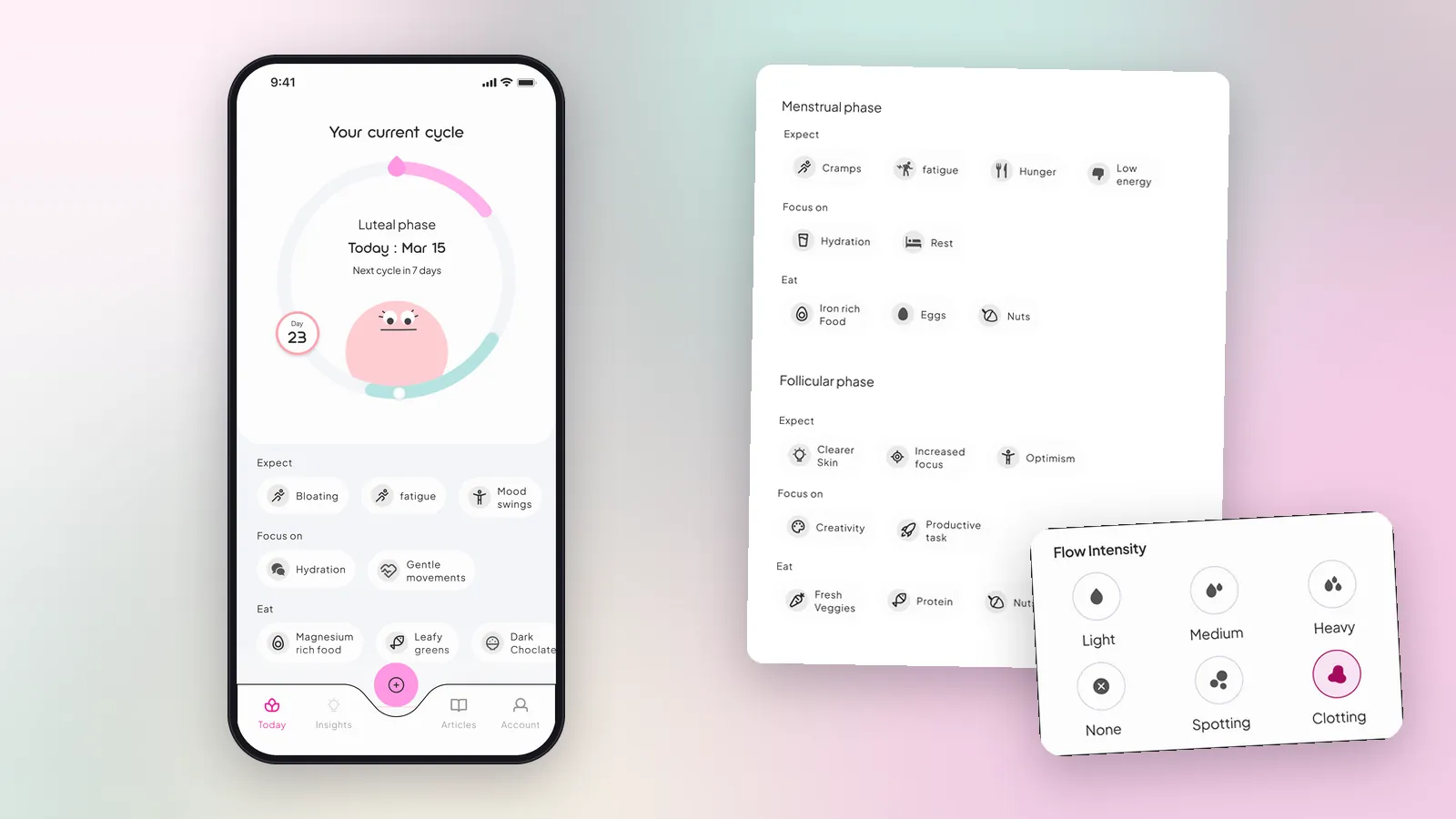
- Flow in one tap: light, medium or heavy, plus spotting and clotting.
- Symptoms tied to your cycle: cramps, headaches, bloating, discharge, cravings, mood and energy, each linked to the phase you were in.
- Cycle and period length, one tap away, with each cycle flagged regular or irregular against your own baseline.
- Your history on your phone, so you can show your doctor months of logs in the appointment.
- Private: tracking is free, and on the free plan your logs stay on your phone.
SheSync doesn't diagnose endometriosis or any other condition. It helps you notice the pattern and explain it clearly.
If your periods are irregular too, read tracking irregular periods and PMOS.
Frequently asked questions
What should I track before seeing a doctor about period pain?
Track when each period starts and ends, how heavy it is, where the pain is, how bad it is and how long it lasts, what you take for it and whether it helps, and whether pain stops you doing normal things. Also note pain with sex or going to the toilet, bloating, tiredness and bowel or bladder changes.
How common is endometriosis in Australia?
healthdirect says around 1 in 9 females in Australia develop endometriosis, and Jean Hailes says 1 in 7 women have been diagnosed with it. Diagnosis can take several years, although the delay is getting shorter as awareness improves.
What counts as a heavy period?
healthdirect says a period may be heavy if you bleed for more than 8 days, pass clots larger than a 50 cent coin, need to change a pad or tampon every 1 to 2 hours or overnight, bleed through clothes, or can't do your normal activities. About 1 in 4 females have heavy periods.
How long should I keep a symptom diary before my appointment?
Two or three cycles gives your doctor a pattern rather than a snapshot. But don't delay seeing a doctor to collect more data if your symptoms are severe or getting worse.
Can SheSync be used as a symptom diary?
Yes. SheSync logs flow (including spotting and clotting), cramps, headaches, bloating, discharge, mood and energy, and ties each entry to your cycle phase, so you can show your doctor your history on your phone. It's free to track. SheSync doesn't diagnose endometriosis or any other condition.
Sources
- Endometriosis, healthdirect
- Endometriosis, Jean Hailes for Women's Health
- Endometriosis checklist (PDF), Jean Hailes for Women's Health
- Raising Awareness Tool for Endometriosis (RATE), RANZCOG
- Heavy periods (menorrhagia), healthdirect
- SheSync privacy policy, Digital Sauce
Last updated 9 October 2026. SheSync is a tracking and education tool, not a medical device or contraceptive method. For medical questions about your cycle, talk to your doctor. If you have sudden severe pain, very heavy bleeding, or feel faint, get medical help straight away.