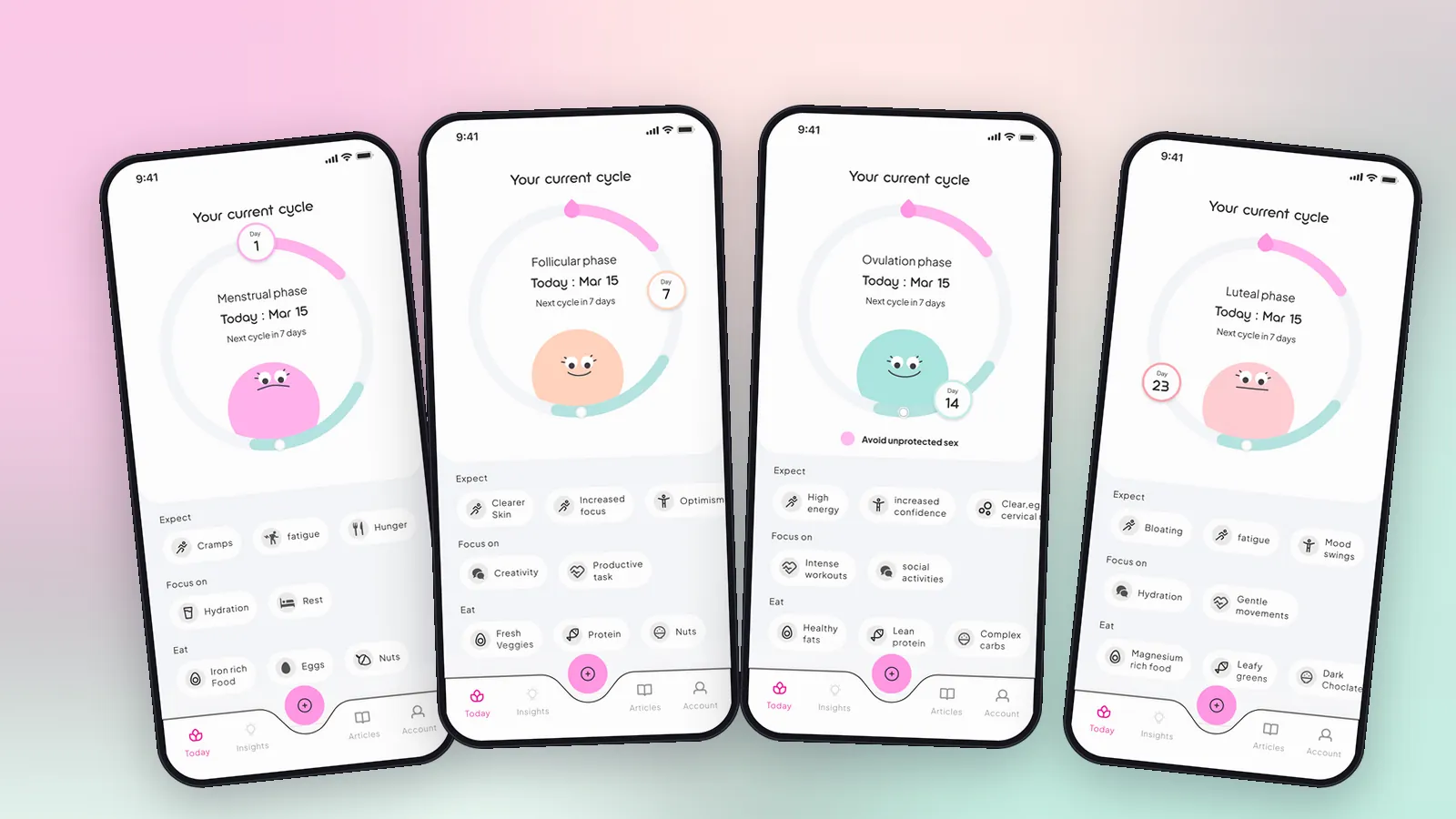
"Cycle syncing" is one of those terms that sounds like it needs a biology degree and a colour-coded spreadsheet. It doesn't. At its core it's a simple idea: your hormones change across your menstrual cycle, those changes affect how you feel, and knowing where you are helps you plan around it.
While building SheSync, a period tracker with partner sync, we spent months reading the research and — more importantly — talking to people who actually track their cycles. The biggest thing we learned: most cycle content is either clinically unreadable or influencer nonsense. This is our attempt at the middle: what the four phases actually are, what's well-established versus still-emerging science, and how to start without overhauling your life.
First, the honest disclaimer
The hormonal phases of the menstrual cycle are textbook physiology — that part is settled science. The popular claims built on top of them ("only do yoga in your luteal phase", phase-specific meal plans) are much less settled; research on things like cycle-based training is genuinely mixed, and every body is different. So treat what follows as a starting map, not a rulebook. Your own logged data beats any generic advice — which is the whole reason tracking apps exist. And none of this is medical advice: if your cycle is very irregular, very painful, or has changed suddenly, that's a conversation for your doctor, not an app.
The four phases of the menstrual cycle
Here's the whole cycle at a glance. Tap a phase for the short version, or read on for the detail.
One cycle, four phases
A textbook 28-day example. Many people don't have 28-day cycles, and ovulation timing varies between people and between cycles.
1. Menstrual Roughly days 1–5
- Hormones
- Estrogen and progesterone are both at their lowest. Iron drops with blood loss, too.
- How it can feel
- Many people feel low-energy, tender or inward-looking.
- What tends to help
- Gentler movement, iron-rich food, earlier nights and a lighter calendar where you can manage it.
2. Follicular Roughly days 6–13
- Hormones
- Your body starts preparing an egg, and estrogen climbs steadily.
- How it can feel
- Rising estrogen is associated with better mood, more energy and, many people report, sharper focus.
- What tends to help
- The natural window for hard things: big workouts, big presentations, difficult conversations and new projects.
3. Ovulation Roughly day 14, give or take
- Hormones
- A surge of luteinising hormone releases the egg, and estrogen peaks.
- How it can feel
- Some people feel their most energetic and social. Others notice a sharp one-day dip or twinge.
- Worth knowing
- Timing varies a lot between people and between cycles, which is why no tracking app should ever be used as contraception.
4. Luteal Roughly days 15–28
- Hormones
- Progesterone takes the lead.
- How it can feel
- Early luteal often feels calm and settled. Late luteal is where PMS lives: irritability, low mood, cravings, poor sleep, bloating.
- What tends to help
- Protecting your sleep, regular meals, lower-intensity exercise if high-intensity feels awful, and warning the people around you.
1. Menstrual phase (roughly days 1–5)
Day 1 is the first day of your period. Estrogen and progesterone are both at their lowest, which is why many people feel low-energy, tender or inward-looking. Iron drops with blood loss, too.
What tends to help: gentler movement (walks, stretching, easy strength work if you feel like it), iron-rich food, earlier nights, and a lighter calendar where you can manage it. This is a maintenance week, not a PB week — and that's fine.
2. Follicular phase (roughly days 6–13)
Your body starts preparing an egg, and estrogen climbs steadily. Rising estrogen is associated with better mood, more energy and — many people report — sharper focus. If you consistently feel like a different person a few days after your period ends, this is why.
What tends to help: this is the natural window for hard things. Big workouts, big presentations, difficult conversations, starting new projects. Schedule ambitiously here if you can.
3. Ovulation (roughly day 14, give or take)
A surge of luteinising hormone releases the egg. Estrogen peaks; some people feel their most energetic and social, others notice a sharp one-day dip or twinge. The fertile window is the ~6 days ending on ovulation day — which matters enormously whether you're trying to conceive or trying not to.
Worth knowing: ovulation timing varies a lot between people and between cycles — the "day 14" of textbooks assumes a 28-day cycle that many people simply don't have. This is where tracking your own cycle beats any generic calendar, and why prediction apps that learn from your history (rather than assuming 28 days) get more useful the longer you use them. It's also why no tracking app should ever be used as contraception.
4. Luteal phase (roughly days 15–28)
Progesterone takes the lead. Early luteal often feels calm and settled; late luteal is where PMS lives — irritability, low mood, cravings, poor sleep, bloating. This isn't weakness or drama, it's a documented hormonal shift, and most people who menstruate experience some PMS symptoms at some point.
What tends to help: protect your sleep, keep blood sugar steadier (regular meals beat heroic fasting here), lower-intensity exercise if high-intensity feels awful, and — genuinely — warning the people around you. A partner who knows PMS is arriving on Thursday responds very differently from one who's blindsided. That single insight is why we built partner sync into SheSync.
Settled science or still debated?
Cycle syncing mixes solid physiology with a lot of internet advice. Test yourself: which of these are settled, which are still debated, and which depend on your own body?
Settled, debated or personal?
Your hormones change across your menstrual cycle
SettledThe hormonal phases of the cycle are textbook physiology.
You should only do yoga in your luteal phase
Still debatedPopular rules like this, built on top of the phases, are much less settled.
Ovulation happens on day 14
Varies by personThe textbook "day 14" assumes a 28-day cycle that many people simply don't have.
Estrogen and progesterone are both at their lowest during your period
SettledIt's why many people feel low-energy, tender or inward-looking in the menstrual phase.
Training differently in each phase gets better results
Still debatedResearch on cycle-based training is genuinely mixed, and every body is different.
The day your energy dips before your period
Varies by personMaybe yours crashes on day 22, not day 25. Your own logged data beats the textbook.
Following a phase-specific meal plan
Still debatedPhase-by-phase meal plans are one of the less settled claims built on the phases.
PMS is a documented hormonal shift, not drama
SettledMost people who menstruate experience some PMS symptoms at some point.
How to actually start cycle syncing
Skip the 30-day overhaul. Do this instead:
- Track for two full cycles before changing anything. Log your period, energy, mood and sleep. You're building your own baseline, not following someone else's.
- Look for your personal patterns. Maybe your energy crashes on day 22, not day 25. Maybe ovulation makes you social, or maybe it makes you nap. Your data > the textbook.
- Change one thing at a time. Start with scheduling: put demanding things in your follicular window and keep late-luteal weeks lighter. That alone is 80% of the value.
- Tell one person. Cycle awareness works better when the people closest to you have it too.
Why we built a tracker for this
Most period tracker apps fall into two camps: sterile medical calendars, or data-hungry platforms with questionable privacy records. We wanted a third thing — an app that explains your cycle like a friend would, keeps your data yours, and brings your partner into the loop instead of leaving them guessing.
That became SheSync: a free period tracker with a companion character that reacts to your logs, digestible daily insights matched to your phase, and one-tap cycle sharing with a partner, parent or friend. It's free on the App Store and Google Play, and it was designed privacy-first from day one.
Not sure which phase you're in today? Our period and ovulation calculator will tell you.
Know your flow. Own your glow. 🌸
This is general information, not medical advice. If you're worried about your symptoms, see your GP or call healthdirect on 1800 022 222. In an emergency in Australia, call 000.
Questions people ask us
What is cycle syncing?
It's a simple idea: your hormones change across your menstrual cycle, those changes affect how you feel, and knowing where you are helps you plan around it.
Is cycle syncing backed by science?
The hormonal phases of the menstrual cycle are textbook physiology, so that part is settled science. Popular claims built on top of them, such as phase-specific meal plans, are much less settled, and research on cycle-based training is genuinely mixed.
How do I start cycle syncing?
Track for two full cycles before changing anything, look for your personal patterns, change one thing at a time, starting with your schedule, and tell one person.
Can I use a cycle tracking app as contraception?
No. Ovulation timing varies a lot between people and between cycles, which is why no tracking app should ever be used as contraception.
Read next
- Period bloatingWhy it happens and what helps
- Ovulation symptoms7 signs your body gives
- Share your cycle with your partnerHow to bring it up, and what they actually see
- Why is my period late?Ten common reasons, and when to see a doctor
- Tracking on the pillWithdrawal bleeds explained
- Period and ovulation calculatorFind out which phase you're in today
Sources
- Menstruation (periods), healthdirect
- Premenstrual syndrome (PMS) and PMDD, healthdirect
- Premenstrual syndrome (PMS), NHS
Last updated 10 November 2026.