How does this water intake calculator work?
I build apps for a living, and I don't trust a number I can't check, so here's every step I use to calculate daily water intake. It estimates the fluid you need from drinks (water, milk, tea, coffee and so on), because that's what the official guidelines count and what you can actually control.
Daily target = (weight in kg × 32.5 ml)
             + exercise (8 ml per minute)
             + weather (20–28°C 500 ml, 28–35°C 1000 ml,
                        35°C+ 1500 ml; humidity over 70% +300 ml)
             + pregnancy 300 ml or breastfeeding 700 ml
Rounded to the nearest 50 ml. Pregnant: at least 2.3 L. Breastfeeding: at least 2.6 L.
- Start with your weight. A widely used rule of thumb for healthy adults is 30 to 35 ml of fluid per kilogram of body weight a day. I use the middle, 32.5 ml/kg, and show the full range. At 70 kg that's 2.1 to 2.45 litres, so a target of about 2.3 litres. It lines up well with the official numbers: at 65 kg it gives 2.1 litres, exactly the NHMRC adequate intake for women, and at 85 kg it gives 2.75 litres, between Australia's 2.6 litres and the US figure of 3.0 litres for men.
- Add exercise. I add 8 ml for every minute of exercise, about half a litre an hour. That's deliberately at the cautious end: the American College of Sports Medicine points out that sweat rates vary hugely between people, and the US National Academies report competitive runners losing 1 to more than 2 litres an hour in the heat.
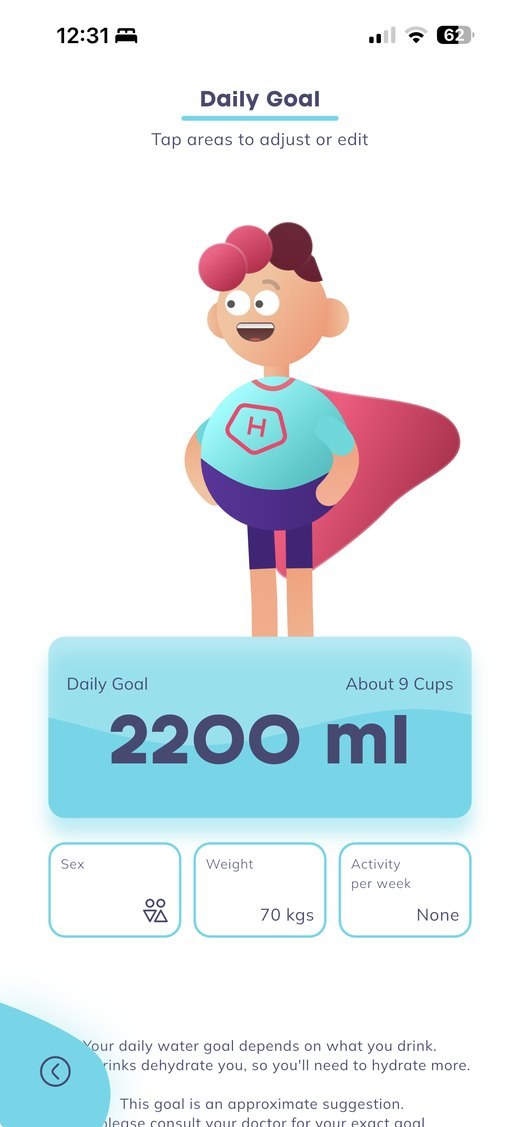
- Add the weather. I use the same weather top-ups as Hydration Hero: 500 ml at 20 to 28°C, 1000 ml at 28 to 35°C and 1500 ml at 35°C or hotter, plus another 300 ml when humidity is over 70%. Below 20°C nothing is added for temperature, but the 300 ml humidity top-up still applies, just as it does in the app. To be upfront: these are my app's logic for hot, active days, not official figures or a medical limit. No guideline body publishes a per-degree number, but the NHMRC notes that people in hot climates may need more than the adequate intake, especially if they're active, and healthdirect says you need more water on a hot or humid day.
- Pregnancy and breastfeeding. I add 300 ml in pregnancy and 700 ml while breastfeeding, the increases used by the European Food Safety Authority, and never go below the Australian adequate intakes of 2.3 and 2.6 litres. That keeps the estimate on the conservative side.
- Caffeine is checked, not subtracted. Moderate coffee and tea count towards your total (more on why below). The calculator flags it if your daily cups look higher than the usual caffeine limits.
How the calculator works
Your daily target, piece by piece
Rounded to the nearest 50 ml. For healthy adults aged 19 and over. Pregnancy and breastfeeding increases are EFSA's; the minimums are the Australian adequate intakes.
When not to use it. This is for healthy adults aged 19 and over. Children and teenagers have different guidelines. If you have a heart, kidney or liver condition, or you've been told to limit fluids, follow your doctor's advice instead: some people genuinely need to drink less. Above about 100 kg the per-kilo rule can overshoot, because fat holds less water than muscle (the NHMRC notes body water ranges from 50 to 80% of body weight depending on lean mass), so treat the guideline figure as your floor and the calculator as the upper end.
How much water should I drink a day by body weight?
Here's the daily water intake chart the calculator is built on, for healthy adults on a mostly sitting day under 20°C. Find your weight, then add about 0.25 litres for every 30 minutes of exercise, 0.5 to 1.5 litres on days of 20°C or warmer, and 0.3 litres more if it's humid.
Daily water by weight
How much water should I drink for my weight?

| Body weight | Litres a day | US fl oz a day | Suggested target |
|---|---|---|---|
| 45 kg (99 lb) | 1.4–1.6 L | 46–53 fl oz | 1.5 L ≈ 6 cups |
| 50 kg (110 lb) | 1.5–1.8 L | 51–59 fl oz | 1.6 L ≈ 6 cups |
| 55 kg (121 lb) | 1.7–1.9 L | 56–65 fl oz | 1.8 L ≈ 7 cups |
| 60 kg (132 lb) | 1.8–2.1 L | 61–71 fl oz | 2.0 L ≈ 8 cups |
| 65 kg (143 lb) | 2.0–2.3 L | 66–77 fl oz | 2.1 L ≈ 8 cups |
| 70 kg (154 lb) | 2.1–2.5 L | 71–83 fl oz | 2.3 L ≈ 9 cups |
| 75 kg (165 lb) | 2.3–2.6 L | 76–89 fl oz | 2.4 L ≈ 10 cups |
| 80 kg (176 lb) | 2.4–2.8 L | 81–95 fl oz | 2.6 L ≈ 10 cups |
| 85 kg (187 lb) | 2.6–3.0 L | 86–101 fl oz | 2.8 L ≈ 11 cups |
| 90 kg (198 lb) | 2.7–3.2 L | 91–107 fl oz | 2.9 L ≈ 12 cups |
| 95 kg (209 lb) | 2.9–3.3 L | 96–112 fl oz | 3.1 L ≈ 12 cups |
| 100 kg (220 lb) | 3.0–3.5 L | 101–118 fl oz | 3.3 L ≈ 13 cups |
| 105 kg (231 lb) | 3.2–3.7 L | 107–124 fl oz | 3.4 L ≈ 14 cups |
| 110 kg (243 lb) | 3.3–3.9 L | 112–130 fl oz | 3.6 L ≈ 14 cups |
| 115 kg (254 lb) | 3.5–4.0 L | 117–136 fl oz | 3.7 L ≈ 15 cups |
| 120 kg (265 lb) | 3.6–4.2 L | 122–142 fl oz | 3.9 L ≈ 16 cups |
Cups are 250 ml Australian metric cups. Ranges use 30 to 35 ml per kg.
How much water should women, men and pregnant or breastfeeding women drink?
Australian guidelines suggest about 2.1 litres (8 cups) of fluids a day for women and 2.6 litres (10 cups) for men, rising to about 2.3 litres in pregnancy and 2.6 litres while breastfeeding. The US, UK and European numbers are close, but they're measured slightly differently, which is why you'll see different figures quoted online.
Official guidelines compared
Women and men, by three official bodies
| Group | Australia (NHMRC), fluids | US (NASEM), drinks | Europe (EFSA), total incl. food |
|---|---|---|---|
| Women | 2.1 L (about 8 cups) | 2.2 L (74 fl oz) | 2.0 L |
| Men | 2.6 L (about 10 cups) | 3.0 L (101 fl oz) | 2.5 L |
| Pregnant | 2.3 L (ages 19–50) | 2.3 L | +0.3 L on top of the women's figure |
| Breastfeeding | 2.6 L (ages 19–50) | 3.1 L | +0.7 L on top of the women's figure |
| Total water incl. food (women / men) | 2.8 L / 3.4 L | 2.7 L / 3.7 L | 2.0 L / 2.5 L |
Sources: NHMRC Nutrient Reference Values, US National Academies (2005), EFSA (2010). In the UK, the NHS keeps it simple: aim for 6 to 8 cups or glasses of fluid a day, and drink enough that your pee is a clear pale yellow, with more if you're pregnant, breastfeeding, in the heat, active for long periods or unwell.
Why do the guidelines differ?
None of them is a precise requirement. Each is an "adequate intake", set from what healthy people in that country typically drink: Australia's comes from a national nutrition survey, the US figure from US survey data, and Europe's from observed intakes combined with healthy urine concentration. They also count different things. Australia and the US quote both total water and the fluid part, while EFSA quotes total water including food, which is why its numbers look lower.
Women, pregnancy and breastfeeding
Australian baselines for women
How much water should a woman drink a day?
For most adult women, about 2.1 litres of fluids a day in Australia, or about 2.2 litres (74 fl oz) by the US guideline, is a sensible baseline. Your own number goes up with your weight, exercise and hot weather, which is what the calculator above adjusts for.
Pregnancy and breastfeeding
During pregnancy the Australian adequate intake rises to about 2.3 litres of fluids a day, and to about 2.6 litres while breastfeeding, because your body is replacing the water that goes into breast milk. The calculator never suggests less than those figures. Treat them as a starting point, not a prescription: your midwife, GP or obstetrician knows your situation, so ask them, particularly if you're vomiting, unwell or have been given specific fluid advice. There's more in our guide to water in pregnancy and breastfeeding.
How much extra water do I need for exercise, hot weather and caffeine?
Active or hot day?
Top up your goal

Exercise
Sweat rates are personal: two people on the same run can lose very different amounts. The ACSM position stand on fluid replacement recommends avoiding losses of more than 2% of your body weight, and the simplest way to learn your own rate is to weigh yourself before and after a session. Each kilogram you lose is about a litre of fluid to replace. Start hydrated, sip during longer sessions, and top up afterwards. For hard sessions over an hour, especially in the heat, a drink with electrolytes and carbohydrate can help more than water alone in some situations.
Exercise
Learn your own sweat rate
- Weigh yourselfBefore a session
- Train as usualStart hydrated, sip in longer sessions
- Weigh againAfter the session
- 1 kg ≈ 1 Lto replace for each kilogram you lose
Hot and humid weather
Heat raises your needs because you sweat more, even sitting still. healthdirect's hot weather advice is to drink water even if you don't feel thirsty and carry a bottle when you go out. The calculator uses the same weather top-ups as Hydration Hero:
| Condition | Extra water |
|---|---|
| Under 20°C (68°F) | Nothing added for temperature |
| 20 to 28°C (68 to 82°F) | +500 ml |
| 28 to 35°C (82 to 95°F) | +1000 ml |
| 35°C (95°F) or hotter | +1500 ml |
| Humidity over 70%, at any temperature | +300 ml more |
The humidity top-up stacks on whichever temperature row applies, so a humid 18°C day adds 300 ml and the most the weather adds is 1.8 litres, on a humid day of 35°C or more. That's a big top-up, so treat it as a guide for hot, active days rather than a target to force down, and spread it across the day. These figures are my app's logic, not a medical limit or an official guideline. If you have a heart or kidney condition or you're on a fluid restriction, follow your doctor's advice instead of these numbers. If you work outdoors, read our guide for tradies and outdoor workers, because a hot shift can need more than any everyday calculator suggests.
Weather top-ups in practice
How heat and humidity stack up
Caffeine
The old idea that coffee dehydrates you doesn't hold up for moderate drinkers. In a 2014 study of 50 men who drank coffee daily, four cups a day hydrated about as well as the same amount of water. A 2016 beverage hydration study found coffee, tea, cola and lager produced about the same urine output as water, while milk and oral rehydration drinks were retained better. So the calculator counts your coffees and teas towards your total rather than penalising them.
The limit worth watching is caffeine itself. healthdirect says healthy adults can safely have around 400 mg a day, about 4 instant coffees or 2 espressos, and Pregnancy, Birth and Baby advises 200 mg or less if you're pregnant or breastfeeding. Alcohol is different: the NHMRC lists both caffeine and alcohol as common diuretics, so don't count beer or wine as hydration.
Caffeine
Coffee counts. Watch the caffeine.
Does water from food count towards my daily intake?
Yes: food provides about 20% of the water you take in, roughly 700 to 800 ml a day for an Australian adult. That's according to the NHMRC, and both healthdirect ("about one fifth") and the US National Academies (about 20%) agree. The calculator's number is for drinks only, so the water in your meals is a bonus on top, not something to subtract.
Water from food
About a fifth of your water comes from food
About 80% from drinks
About 20% from food
700–800 ml a day from food for an Australian adult (NHMRC)
Drinks only is what the calculator counts; food water comes on top
Fruit, vegetables, soups, yoghurt and cooked grains are mostly water. If you eat plenty of them, you'll naturally need a bit less from drinks; if you live on dry snacks and takeaway, aim for the top of your range.
How do I turn my water intake number into a daily habit?
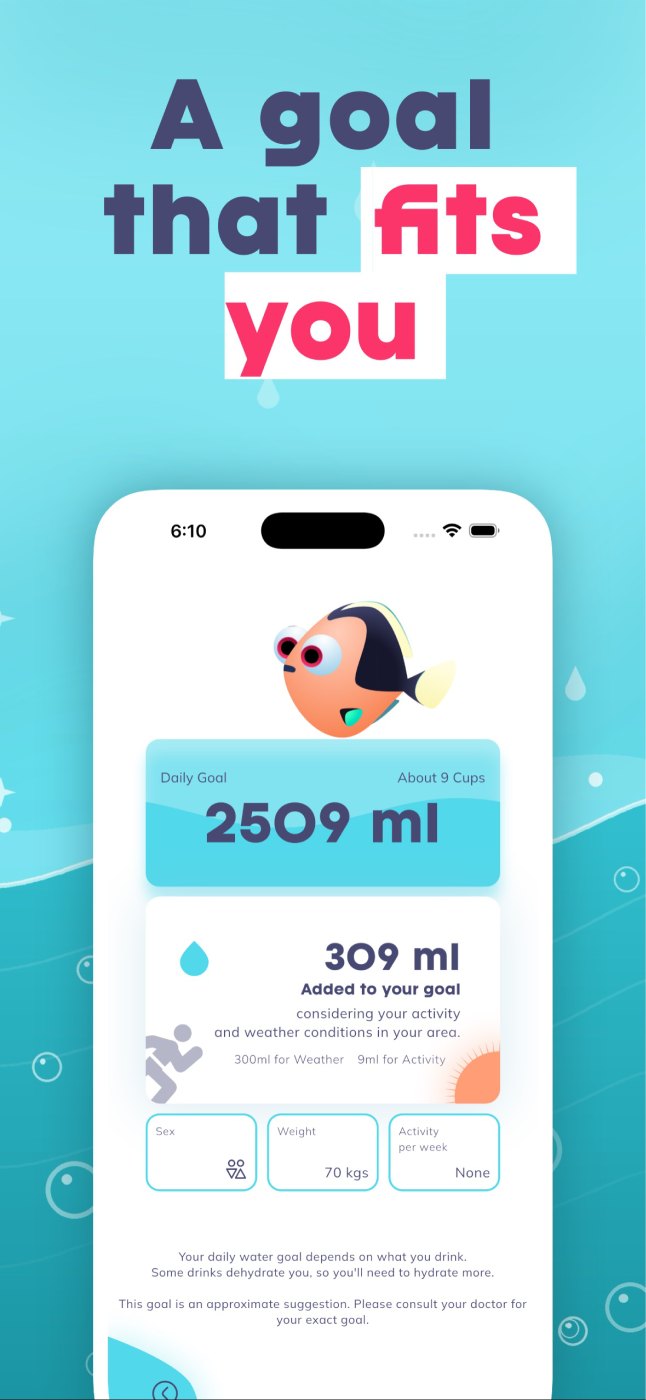
Knowing your number is the easy part; remembering to drink it on a busy Tuesday is harder. That's why I built Hydration Hero, a water tracker where a hero you design reacts to every drink you log. Here's what it does:
- Personalised goals set from your own details, so you can use the number from this calculator.
- Power Ups that use weather and health data (from Apple Health on iPhone or Health Connect on Android) to give you a more tailored daily water recommendation.
- Reminders at intervals you choose, rather than a nag every few minutes.
- Drinks weighted by their effect. Caffeine and alcohol don't count like plain water, and you can add your own custom drinks.
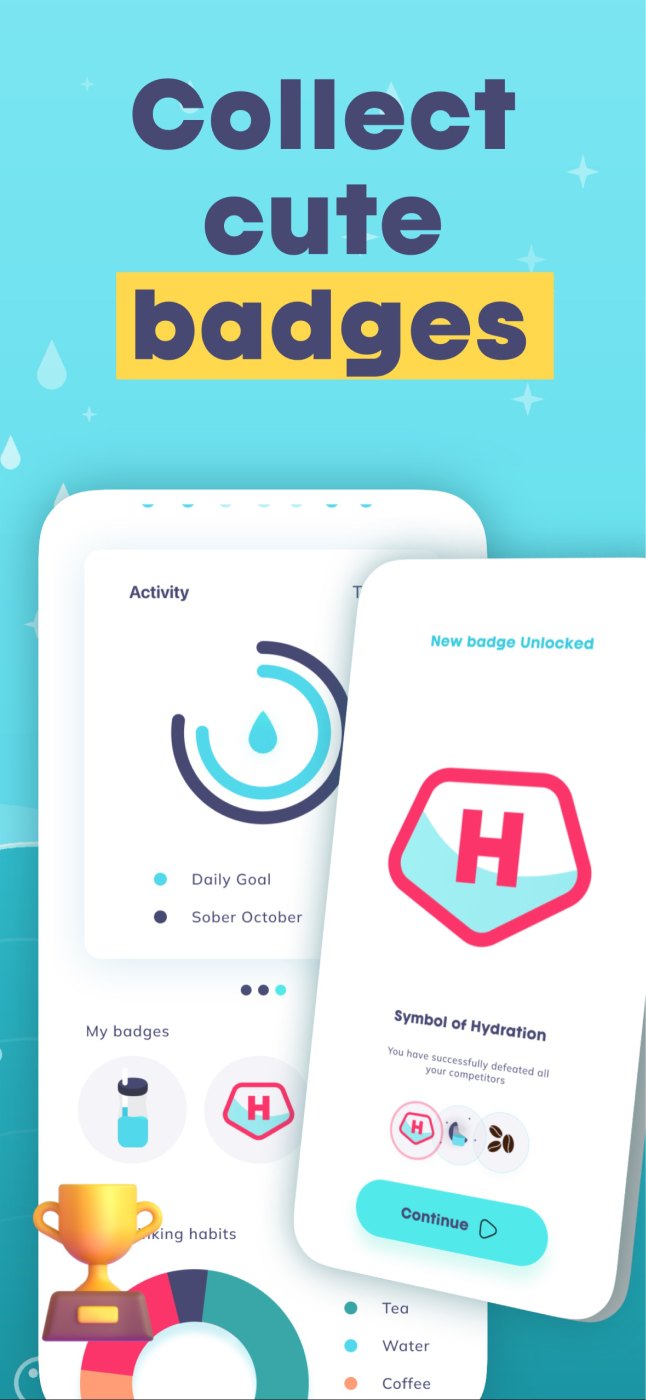
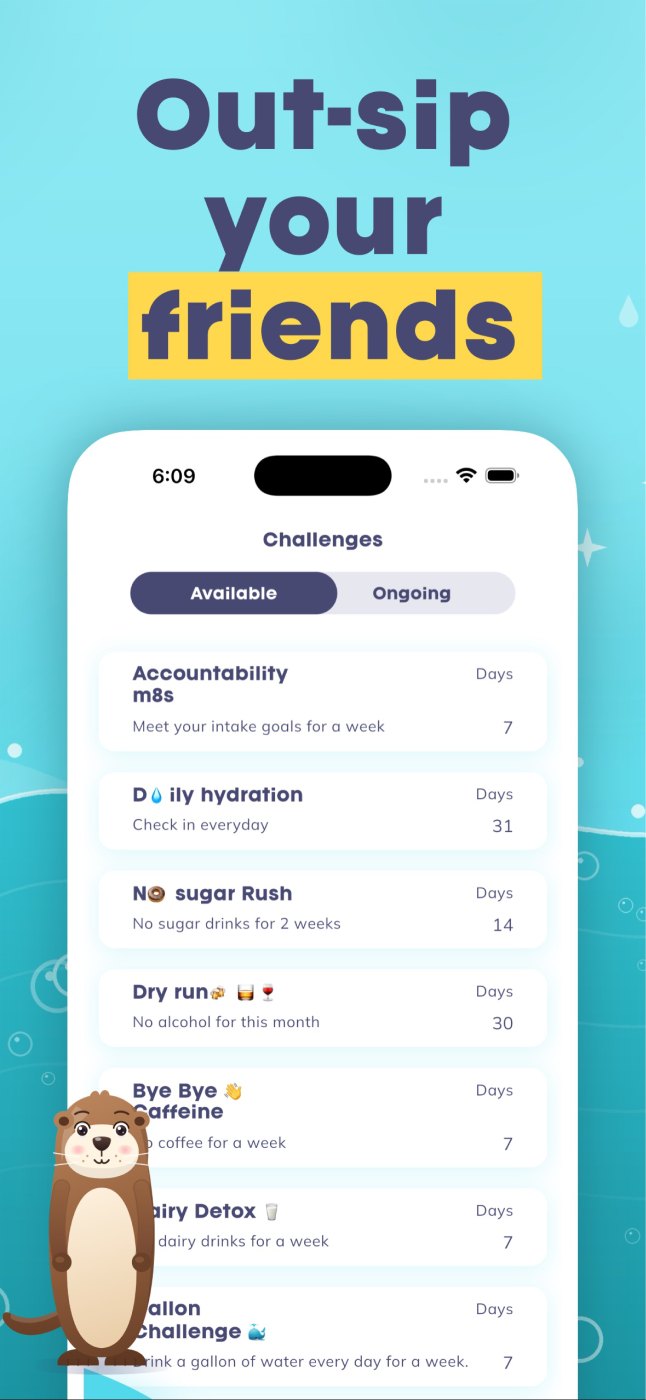
- Streaks and badges to keep the habit going, plus challenges for things like cutting back on caffeine.
- Mate challenges so you can compete with friends.
- On the devices you use: iPhone, Apple Watch and Android (8.0 or later; the Health Power Up needs Android 9 or later). The iPhone app also runs on iPad.
Hydration Hero
Turn your number into a daily habit

Track this goal automatically in Hydration Hero
Free to download on iPhone, Apple Watch and Android (the iPhone app also runs on iPad), with optional in-app purchases. Made by Digital Sauce in Melbourne.


A good fit if you…
- forget to drink at work or on busy days
- like streaks, badges and a bit of friendly competition
- want coffee and alcohol counted honestly
Not the right tool if you…
- have been told to limit fluids: follow your care team, not an app
- want a medical device (it's a habit tracker)
- are on an iPhone older than iOS 18.6
No app? No problem
The jug method: fill it, finish it
Rather not use an app at all? Fill a jug or a 1-litre bottle with your target each morning and finish it by dinner. The Hydration Hero privacy policy explains what the app stores and why, and this calculator doesn't store anything.
Water intake FAQs: what else do people ask?
How much water should I drink a day?
Most healthy adults need roughly 2 to 3 litres of fluid a day from drinks, which works out to about 30 to 35 ml per kilogram of body weight. Australia's NHMRC sets about 2.1 litres for women and 2.6 litres for men, and you need more on active, hot or humid days.
How much water should a woman drink a day?
Australian guidelines suggest about 2.1 litres (8 cups) of fluids a day for adult women, and the US National Academies suggest about 2.2 litres (74 fl oz) from drinks. That rises to about 2.3 litres in pregnancy and 2.6 litres while breastfeeding in Australia (3.1 litres in the US guideline). Your midwife or doctor's advice comes first.
Is eight glasses of water a day right?
It's in the right ballpark for many adults but it isn't a rule. Eight 250 ml glasses is 2 litres, close to the Australian guideline for women but below it for men, and the NHS suggests 6 to 8 cups or glasses of fluid a day. Body size, activity and weather move the number.
How much more water should I drink in hot weather?
This calculator uses the same weather top-ups as Hydration Hero: 500 ml extra at 20 to 28°C, 1000 ml at 28 to 35°C and 1500 ml at 35°C or hotter, plus 300 ml more when humidity is over 70%, at any temperature (so a humid day under 20°C still adds 300 ml). These are app logic for hot, active days, not a medical limit. If you have a heart or kidney condition or are on a fluid restriction, follow your doctor's advice.
Does coffee count towards my daily water intake?
Yes. Tea, coffee and milk all count as fluid in Australian and UK guidance, and a 2014 study found moderate coffee hydrated about as well as water in men who drank coffee every day. Keep caffeine to about 400 mg a day (around 4 instant coffees), or 200 mg if you're pregnant or breastfeeding.
How do I know if I'm drinking enough water?
Check your urine: a clear, pale yellow colour usually means you're drinking enough. Thirst, a dry mouth, headaches, dark urine and weeing less often than usual are early signs of mild dehydration.
Can you drink too much water?
It's rare in healthy people, because the body is good at getting rid of extra water, which is why Australia's NHMRC hasn't set an upper limit. The risk is drinking very large amounts quickly, for example during long endurance events, which can dilute the sodium in your blood. Drink to replace what you lose rather than as much as possible.
Is a water intake counter app worth using?
If you already hit your number without thinking, you don't need one. If you forget to drink at work or on busy days, a counter with reminders and a visible goal helps turn the number into a habit. I built Hydration Hero for exactly that. It runs on iPhone, Apple Watch and Android (the iPhone app also runs on iPad), and its Power Ups use weather and health data (Apple Health on iPhone, Health Connect on Android) to tailor your daily goal. A jug on your desk works too.
Is this water intake calculator medical advice?
No. It gives general estimates for healthy adults aged 19 and over. If you're pregnant, breastfeeding, unwell, under 19, or have been told to limit fluids for a heart, kidney or liver condition, follow your doctor's or midwife's advice.
Sources
I opened and checked every source below on 3 November 2026.
- Water: Nutrient Reference Values for Australia and New Zealand, NHMRC (Eat For Health)
- Drinking water and your health, healthdirect
- Dehydration, healthdirect
- Hot weather risks and staying cool, healthdirect
- Caffeine, healthdirect
- Caffeine during pregnancy, Pregnancy, Birth and Baby
- Water, drinks and hydration, NHS
- Dietary Reference Intakes for Water, Potassium, Sodium, Chloride, and Sulfate (2005), chapter 4: Water, National Academies
- Scientific Opinion on Dietary Reference Values for water, EFSA Journal 2010; 8(3):1459 (adult AIs 2.0 L women and 2.5 L men, p. 1 and p. 39; pregnancy +300 ml and breastfeeding +700 ml, sections 6.8 and 6.9, pp. 38–39; about 80% from drinks, p. 20)
- EFSA sets European dietary reference values for nutrient intakes, EFSA
- Exercise and fluid replacement: ACSM position stand (2007), PubMed
- No evidence of dehydration with moderate daily coffee intake (Killer et al., 2014), PubMed
- A randomized trial to assess the potential of different beverages to affect hydration status (Maughan et al., 2016), PubMed
- Hydration Hero privacy policy, Digital Sauce
Not medical advice. This calculator and article give general information for healthy adults. They aren't a substitute for advice from your doctor, midwife or other health professional. See a doctor if you're often very thirsty, have ongoing symptoms of dehydration, or have a heart, kidney or liver condition. For health advice in Australia, call healthdirect on 1800 022 222. In an emergency, call triple zero (000).
Written by Sanket Singh, founder of Digital Sauce. Questions or corrections: hello@digitalsauce.io.
Related hydration guides
Apple and the Apple logo are trademarks of Apple Inc., registered in the U.S. and other countries. App Store is a service mark of Apple Inc. Google Play and the Google Play logo are trademarks of Google LLC.